Windows 3.1 Latest Download
Windows 3.1 represented a significant leap forward from its predecessor and played a pivotal role in shaping the future of personal computing. At a time when graphical user interfaces were still in their infancy, this version offered enhanced stability, ease of use, and superior performance to users worldwide.
As a result, it quickly became one of the most widely used operating systems of its era. Furthermore, Windows 3.1 introduced numerous improvements that made everyday computing tasks more efficient and visually appealing.
Unlike previous versions, it offered improved font rendering, enhanced multimedia compatibility, and a smoother user interface. Consequently, both home and business users could manage files, run applications, and accomplish complex tasks with greater ease and confidence.
Windows 3.1 also contributed to expanding the Windows ecosystem by encouraging software developers to create more sophisticated applications.
With its enhanced capabilities and broader compatibility, it solidified Microsoft’s position in the operating system market. Therefore, Windows 3.1 is considered a milestone in its evolution, bridging the gap between older graphics systems and modern computing environments.
Key Features:
Windows 3.1 introduced several powerful features that significantly improved the user experience.
- TrueType Font Support.
- Built-in Scalable Font Technology.
- High-Quality Text Display on Screen and Printers.
- No External Font Systems Required.
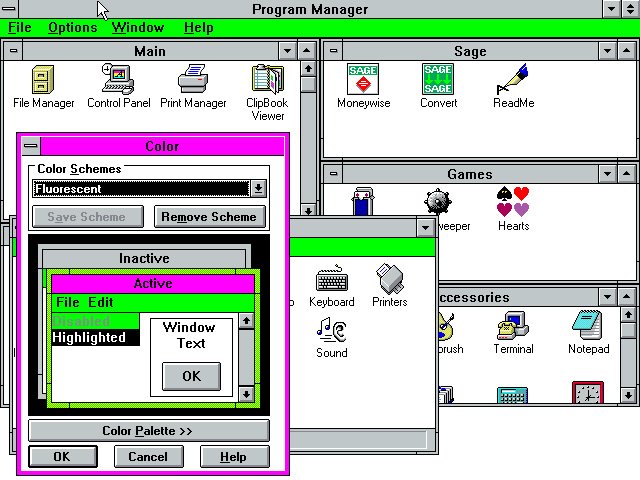
- Improved Graphical User Interface.
- More Accurate Icons and Graphics.
- Improved Window Management.
- Smoother User Interactions.
- Multimedia Features.
- Native Sound Card Support.
- Improved Audio Playback.
- Better Integration with Multimedia Applications.
- Improved Stability and Performance.
- Fewer System Crashes Compared to Windows 3.0.
- Improved Memory Management.
- Faster Application Launch.
- Improved Program Manager and File Manager.
- Easier Application Switching.
- Better File Organization.
- Better User-Friendly for Beginners.
- Advanced Networking Support.
- Built-in Networking Features.
- Improved Connectivity in Enterprise Environments.
- Peer-to-Peer Networking Support.
What’s New / Latest Updates?
Windows 3.1 introduced several major updates, followed by releases that further expanded its functionality.
- Windows 3.1 (Initial Release – 1992).
- Added TrueType fonts.
- Removed support for Real Mode.
- Improved system stability.
- Windows Workgroups 3.1 (1992).
- Built-in networking features.
- File and printer sharing capabilities.
- Improved collaboration tools.
- Windows 3.11 (1993).
- Improved network performance.
- Bug fixes and stability improvements.
- Better compatibility with modern hardware of the time.
Thus, these updates not only improved the operating system but also extended its lifespan and ease of use in both home and business environments.
You may also Download:
Windows 10

System Requirements:
Windows 3.1 required hardware with slightly higher specifications than the previous version.
Minimum Requirements
- Processor: Intel 80286 or higher.
- RAM: 1 MB minimum.
- Storage: Approximately 10 MB of free disk space.
- Graphics Card: EGA, VGA, or compatible monitor.
- Operating System: MS-DOS (required).
Recommended Requirements
- Processor: Intel 80386 or higher.
- RAM: 2 MB or more.
- Storage: Hard drive with additional space for applications.
- Graphics Card: VGA for optimal performance.
- Input Devices: Mouse recommended.
Advantages and Disadvantages:
Advantages:
- Greater stability and reliability
- Display of high-quality TrueType fonts
- Improved multimedia compatibility
- Enhanced user interface
- Extensive software compatibility
Disadvantages:
- Still based on MS-DOS
- Limited multitasking compared to modern operating systems
- Hardware limitations for advanced features
- Not suitable for modern applications
6. Additional Features and Capabilities:
In addition to its core features, Windows 3.1 offered several additional capabilities that contributed to its Widespread adoption. Success.
- Drag-and-drop functionality.
- Simplified file management.
- Improved user interaction.
- Faster workflow for daily tasks.
- Screen savers.
- Built-in screen saver options.
- Screen burn-in prevention.
- Additional customization options for users.
- Improved printing support.
- Greater printer compatibility.
- High-quality document printing.
- Improved printing performance.
- Expanded application ecosystem.
- Large number of third-party applications.
- Boom in productivity software.
- Greater developer involvement.
- Educational and business use.
- Widespread adoption in schools and offices.
- Enhanced productivity tools.
- A reliable platform for daily operations.
Frequently Asked Questions:
What is Windows 3.1?
Windows 3.1 is a graphical operating system released in 1992. It is an evolution of Windows 3.0 in terms of performance, stability, and features.
What made Windows 3.1 popular?
Thanks to its stability, TrueType fonts, and improved multimedia capabilities, Windows 3.1 became extremely popular among users and businesses.
Can Windows 3.1 run without DOS?
No, it requires MS-DOS to function, as it is not a standalone operating system.
What is Windows for Workgroups 3.1?
It is a version of Windows 3.1 that includes built-in networking features for sharing files and printers.
Is Windows 3.1 still used today?
Although it is no longer used in modern systems, it remains important for understanding the evolution of operating systems.
Conclusion:
Windows 3.1 played a pivotal role in the development of graphical computing, introducing significant improvements in usability, stability, and performance. By improving the user interface and adding essential features such as TrueType fonts and multimedia support, it made computing more accessible and efficient for a wider audience. As a result, it became the standard platform in homes, schools, and businesses in the early 1990s.
Homepage: windowstan.info
Post Comment