![Windows 3.0 Free Download [Latest]](https://windowstan.info/wp-content/uploads/2026/03/Windows-3.0-Free-Download-Latest.jpg)
Windows 3.0 Free Download [Latest]
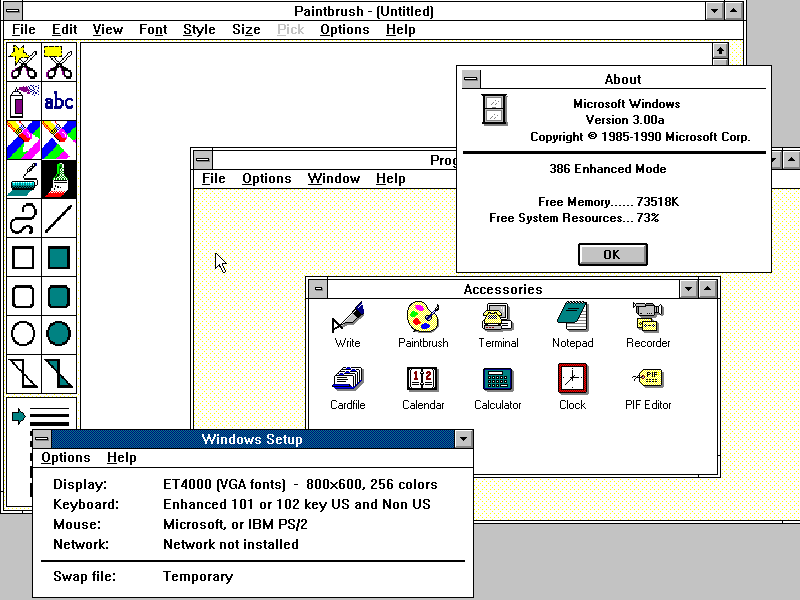
Windows 3.0 marked a turning point in the evolution of personal computing, offering a more user-friendly graphical interface and significantly improved performance compared to previous versions.
Released by Microsoft in 1990, this operating system dramatically enhanced the ease of use of computers for both professionals and everyday users. As a result, it played a pivotal role in the widespread adoption of graphical user interfaces.
Furthermore, Windows 3.0 built upon the features of previous versions, introducing new functionalities that made multitasking more efficient and visually appealing.
Unlike earlier versions, it offered better memory management and compatibility with advanced hardware, allowing for smoother application performance. Consequently, users enjoyed a more responsive and stable computing environment.
The success of Windows 3.0 also solidified Microsoft’s position as the undisputed leader in the software industry. With its improved design, superior performance, and growing software ecosystem, it attracted both developers and businesses.
Key Features:
Windows 3.0 introduced several innovative features that significantly improved usability and performance.
- Graphical User Interface (GUI) Improvements.
- Improved Icons and Window Management.
- Support for Multiple Nested Windows.
- Improved Navigation with User-Friendly Controls.
- Program Manager and File Manager.
- Centralized Application Operating System.
- Organized File Browsing Experience.
- Simplified File Operations.
- Improved Memory Management.
- Support for Real Mode, Standard Mode, and Enhanced 386 Mode.
- Better Use of Extended and Extended Memory.
- Improved Application Performance.
- Multitasking Capability.
- Ability to Run Multiple Applications Simultaneously.
- More Stable Environment Compared to Previous Versions.
- Efficient Task Switching.
- Improved Graphics and Performance.
- VGA Graphics Support.
- Better Visual Experience at Higher Resolution.
- Fastest Execution of Graphics Applications.
- Broad Software Compatibility.
- Support for a Wide Range of DOS Applications.
- Growing Windows Software Ecosystem.
- Greater Support for Developers.
What’s New/Latest Updates?
Although Windows 3.0 was a significant release, Windows itself received updates that improved its performance and ease of use.
- Windows 3.0 (Initial Release – 1990).
- Introduced an improved graphical interface.
- Improved memory management.
- Compatibility with 386 processors.
- Windows 3.0a (Multimedia Extensions).
- Added multimedia features.
- Sound card and CD drive support.
- Improved audio and video playback.
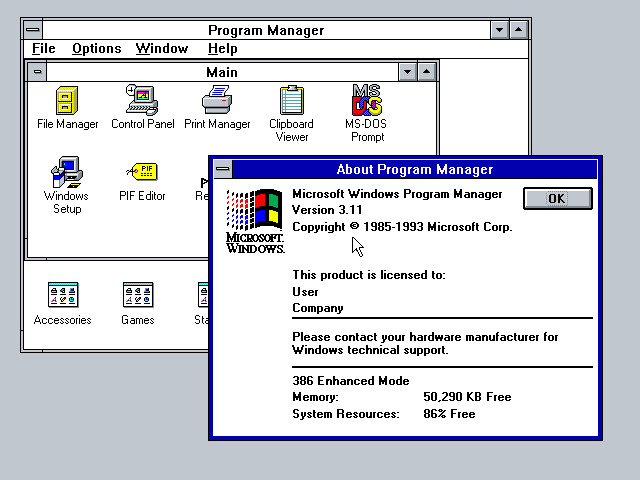
- Windows 3.1 (Later Enhancements).
- Introduced TrueType fonts.
- Increased stability and performance.
- Improved multimedia compatibility.
Thus, while Windows 3.0 laid the foundation, its subsequent updates and releases expanded its capabilities and increased its appeal to users.
You may also Download:
System Requirements:
For Windows 3.0 to function efficiently, users needed specific hardware specifications, considered advanced for the time.
Minimum Requirements:
- Processor: Intel 8086/8088 or higher.
- RAM: 640 KB minimum.
- Storage: Hard drive recommended (optional).
- Graphics: CGA, EGA, or VGA compatible monitor.
- Operating System: MS-DOS required.
Recommended Requirements:
- Processor: Intel 80386 for enhanced mode.
- RAM: 1 MB or more.
- Storage: Hard drive with sufficient space for applications.
- Graphics: VGA for optimal experience.
- Input Devices: Mouse recommended.
Advantages and Disadvantages:
Advantages:
- Intuitive graphical interface
- Improved multitasking capabilities
- Better memory management
- Enhanced graphics support
- Powerful application system
Disadvantages:
- Still based on MS-DOS
- Limited stability compared to modern systems
- Hardware limitations for advanced features
- Learning difficulty for new users at the time
Additional Features and Capabilities:
In addition to its core features, Windows 3.0 introduced several improvements that contributed to its success.
- Virtual Memory Support.
- Allowed systems to use hard disk space as random access memory (RAM).
- Improved performance on systems with limited memory.
- Growth of the Application Environment.
- Encouraged the development of third-party software.
- Popular applications such as spreadsheets and word processors became widely available.
- Improved Developer Tools.
- Provided better application programming interfaces (APIs) for software developers.
- Simplified application development for Windows.
- Games and Entertainment.
- Introduced simple graphical games.
- Improved support for interactive entertainment.
- Business Productivity.
- Widespread adoption in business environments.
- Improved the efficiency of office tasks.
Frequently Asked Questions:
What is Windows 3.0?
Windows 3.0 is a graphical operating system developed by Microsoft and released in 1990. It significantly improved usability and performance compared to previous versions.
Why was Windows 3.0 important?
It contributed to the widespread adoption of graphical user interfaces and helped solidify Microsoft’s position as a leader in the software industry.
Can Windows 3.0 run modern applications?
No, it cannot run modern applications due to hardware and software limitations.
What modes did Windows 3.0 support?
It supported Real Mode, Standard Mode, and 386 Mode, optimized for different hardware configurations.
Is Windows 3.0 still used today?
It is no longer used in enterprise environments, but it remains important for historical and educational purposes.
Conclusion:
Windows 3.0 is a landmark release in the history of computing, offering significant improvements in usability, performance, and graphics capabilities. By providing a more intuitive interface and better multitasking support, it changed the way users interact with computers. In this way, it paved the way for later versions of Windows and modern operating systems.
Homepage: windowstan.info
Post Comment