Windows 95 Latest Download
Windows 95 is one of the most important operating systems Microsoft has ever released. Upon its launch in 1995, it revolutionized personal computing by introducing a completely new graphical user interface that combined ease of use with power.
As a result, it achieved phenomenal success with both home and business users. Furthermore, Windows 95 represented a significant leap forward from previous versions of Windows by integrating a 32-bit architecture with enhanced multitasking capabilities.
Unlike earlier versions, it offered superior performance, stability, and compatibility. Therefore, it played a crucial role in making computers more accessible to the average user.
The operating system also introduced features that are still used in modern versions of Windows. For example, the Start menu and the taskbar became essential elements. Thus, Windows 95 not only changed the way users interact with computers but also laid the foundation for future operating systems.
Key Features of Windows 95:
Windows 95 introduced several revolutionary features that transformed the computing experience. These features were not only innovative but also made the system easier to use.
Start Menu and Taskbar:
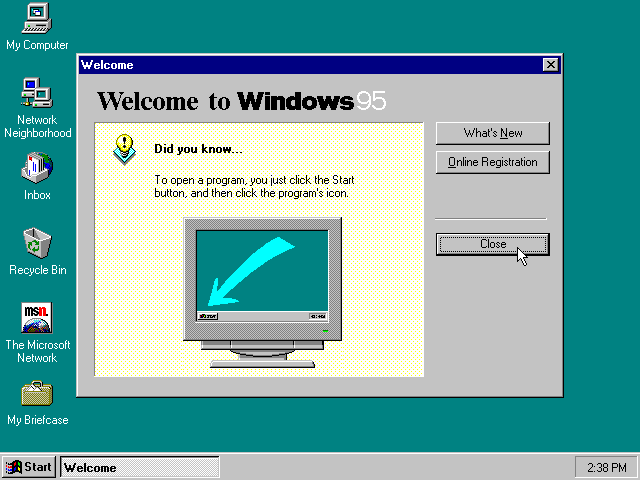
One of the most prominent features of Windows 95 was the introduction of the Start Menu and Taskbar, which simplified navigation and allowed users to quickly access programs.
Plug and Play Support:
Another key feature was Plug and Play, which allowed for the automatic installation of devices such as printers and sound cards without complex configurations.
32-bit Architecture:
In addition, Windows 95 supported 32-bit applications, which improved system performance and facilitated multitasking.
Longer File Names:
Unlike previous systems, Windows 95 allowed file names longer than eight characters, enabling users to organize their files more efficiently.
Integrated Network Connectivity:
Windows 95 included integrated network connectivity and was compatible with the internet, an increasingly important feature.
Improved User Interface:
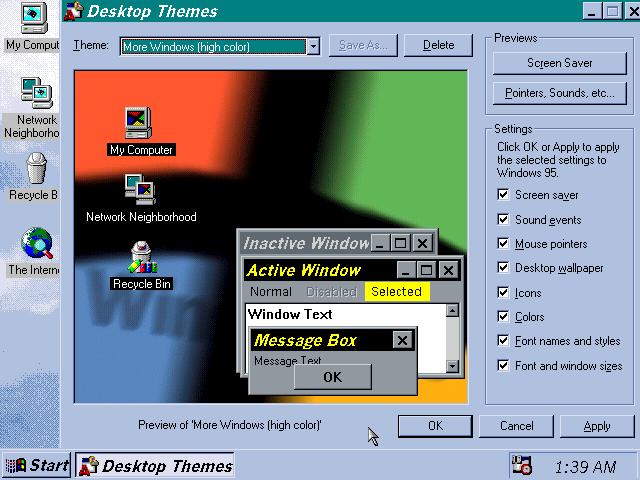
The graphical user interface was significantly improved, offering users a smoother browsing experience and better visual organization.
What’s New/Latest Updates?
After its release, Windows 95 introduced several updates that distinguished it from previous versions.
Internet Integration:
Initially, internet compatibility was limited. However, later updates, such as the integration of Internet Explorer, improved browsing capabilities.
Improved Multitasking:
Compared to Windows 3.x, multitasking was significantly improved. As a result, users could run multiple programs more efficiently.
Hardware Compatibility:
Windows 95 supported a wider range of hardware. Consequently, it became more versatile and easier to use.
Service Releases (OSR Releases):
Microsoft released updated versions such as OSR2. These updates improved performance, added USB support, and increased system stability.
You may also Download:
4. System Requirements
Windows 95 had modest system requirements, making it accessible to many users at the time.
Minimum Requirements:
- Processor: 386DX or higher.
- RAM: 4 MB (8 MB recommended).
- Hard Drive: 50-55 MB of free space.
- Monitor: VGA or higher.
- Floppy disk drive or CD-ROM drive.
Recommended Requirements:
- Processor: 486 or Pentium.
- RAM: 8-16 MB.
- Storage: 100 MB or more.
- Sound card and speakers.
Advantages and Disadvantages:
Advantages:
- User-friendly interface.
- Addition of the Start menu.
- Plug-and-play support.
- Improved multitasking.
- Broad software compatibility.
Disadvantages:
- Limited stability compared to modern operating systems.
- Basic security features.
- Frequent system crashes (in early versions).
- Limited compatibility with modern hardware.
- No built-in advanced security.
Additional Features and Capabilities:
Windows 95 also included several additional features that enhanced its usability and appeal.
Multimedia Compatibility:
The operating system offered improved audio and video compatibility, making it easier for users to enjoy multimedia applications.
Disk Management Tools:
Built-in tools helped users manage storage efficiently, simplifying system maintenance.
DOS Compatibility:
Windows 95 maintained compatibility with MS-DOS programs, allowing users to continue running older applications.
Gaming Compatibility:
Windows 95 became a popular platform for PC games, and many classic games were designed specifically for it.
Internet Explorer Integration:
Later versions included Internet Explorer, allowing users to browse the internet directly from their computers.
Frequently Asked Questions:
What made Windows 95 so popular?
Its intuitive interface, Start menu, and improved performance all contributed to its widespread popularity.
Was Windows 95 the first operating system with a graphical user interface (GUI)?
No, there were earlier versions, but Windows 95 established the use of GUIs in computing.
Can modern programs run on Windows 95?
No, it is incompatible with most modern applications.
Was Windows 95 compatible with the internet?
Yes, especially after updates that included Internet Explorer.
Is Windows 95 still in use today?
It is a very old operating system, but it can be used for educational purposes or out of nostalgia.
Conclusion:
Windows 95 was a revolutionary operating system that changed the way people interact with computers. It not only offered a modern interface but also improved performance and ease of use. As a result, it became a landmark in the history of computing.
Homepage: windowstan.info
Post Comment