
Windows 2.10 (Windows/286 and Windows/386) Free Download
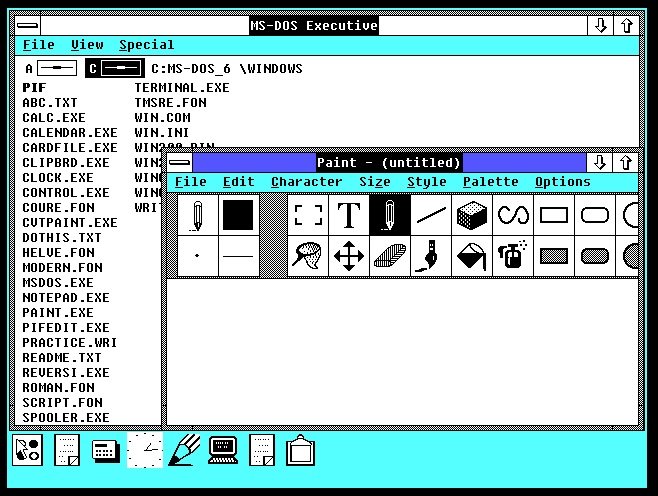
Windows 2.10 marked a significant turning point for Microsoft Windows, particularly with the release of specialized editions designed specifically for different processors. Released as part of the Windows 2.x family, this update was divided into Windows/286 and Windows/386, each designed to take full advantage of the capabilities of specific hardware architectures. This represented one of the first examples of Microsoft optimizing its operating system to be compatible with different processor technologies.
Furthermore, Windows 2.10 built upon the improvements introduced in previous versions, such as nested windows and enhanced memory management. However, this version went further by leveraging the advanced features of processors, especially in the Windows/386 edition. As a result, users experienced improved multitasking, superior performance, and more efficient use of system resources. Thus, it became a significant step towards modern multitasking operating systems.
Windows 2.10 also demonstrated Microsoft’s innovative approach to computing. Recognizing the capabilities of newer processors, such as the Intel 80386, Microsoft was able to introduce features that significantly improved system performance. Therefore, this version not only enhanced the user experience but also paved the way for future innovations in Windows operating systems.
Key Features:
- Processor-Specific Editions.
- Windows/286 optimized for Intel 80286 processors.
- Windows/386 designed to take advantage of the advanced capabilities of the 80386 processor.
- Improved Multitasking.
- Greater ability to run multiple applications simultaneously.
- Better switching between active programs.
- Expanded Memory Management.
- Windows/386 offers enhanced memory management.
- Enables access to expanded and optimized memory.
- Virtual DOS Machines (Windows/386).
- Enables running multiple DOS applications simultaneously.
- Provides isolated environments for greater stability.
- Tempered Windows.
- Continued support for nested windows.
- Improved workspace organization and ease of use.
- Improved Performance.
- System performance is optimized based on processor capabilities.
- Reduced latency and increased responsiveness.
What’s New / Latest Updates?
Introducing Windows/386:
First and foremost, the most significant update in Windows 2.10 was the introduction of Windows/386. This version took advantage of the advanced features of the Intel 80386 processor, including virtual memory and multitasking capabilities. As a result, it offered a significant performance boost compared to previous versions.
Advanced Memory Utilization:
Furthermore, Windows/386 introduced improved memory management techniques. This allowed the system to utilize expanded memory more efficiently, resulting in smoother performance. Consequently, users could run more applications without experiencing any slowdowns.
Multiple DOS Sessions:
Windows/386 also allowed multiple DOS sessions to run simultaneously. This feature was revolutionary at the time, enabling users to multitask across DOS applications. This significantly increased productivity.
Improvement to Windows/286:
In addition to the advanced features offered by Windows/386, it also received significant improvements. These enhancements ensured better performance and stability in systems using the 80286 processor.
You may also Download:
System Requirements
- Windows/286 Requirements.
- Intel 80286 Processor.
- At least 1 MB of RAM.
- MS-DOS 3.0 or later.
- Hard drive or floppy disk drive.
- Graphics card (CGA, EGA, or VGA).
- Windows/386 Requirements.
- Intel 80386 Processor.
- At least 2 MB of RAM.
- MS-DOS 3.0 or later.
- Hard drive recommended.
- Compatible graphics card.
Additional Requirements:
- Keyboard required.
- Mouse recommended for easier navigation.
Advantages and Disadvantages:
Advantages:
- Processor-specific improvements.
- Greater multitasking capabilities.
- Advanced memory management in Windows/386.
- Ability to run multiple DOS applications.
- Improved overall performance.
Disadvantages:
- Still relies on MS-DOS.
- Limited graphics capabilities.
- Higher hardware requirements.
- Complex configuration for some users.
- Initially not very well received.
Additional Requirements or Features:
Improvements in User Experience:
Windows Version 2.10 introduced a more flexible and powerful user experience, allowing users to efficiently perform more complex tasks.
Business and Professional Use:
Thanks to improvements in multitasking and memory management, this version was better suited to work environments and, therefore, began to gain increasing popularity in the professional sphere.
Development Opportunities:
Developers were able to create more sophisticated applications thanks to the improvements in system capabilities, which contributed to the growth of the Windows ecosystem.
Foundation for Future Systems:
Windows 2.10 played a fundamental role in paving the way for more advanced operating systems like Windows 3.0, helping to define the future of personal computing.
Frequently Asked Questions:
What is Windows 2.10?
Windows 2.10 is an update to the Windows 2.x series and includes the Windows/286 and Windows/386 editions, optimized for different processors.
What is the difference between Windows/286 and Windows/386?
Windows 2.10 was designed for the 80286 processor, while Windows/386 took advantage of the 80386 processor’s advanced features to improve multitasking and memory management.
Did Windows 2.10 support multitasking?
Yes, especially Windows/386, which offered advanced multitasking capabilities.
Was it widely adopted?
It contributed to its wider adoption, but its true popularity emerged with later versions like Windows 3.0.
What was its significance?
Windows 2.10 introduced processor optimization and advanced multitasking features that influenced subsequent versions of Windows.
Conclusion:
Windows 2.10 marked a significant milestone in the development of Microsoft Windows, primarily because it introduced processor-specific versions and advanced system capabilities. By leveraging the power of the Intel 80286 and 80386 processors, it significantly improved performance, multitasking, and memory management. Therefore, it represented a shift from simple graphical interfaces to more powerful computing environments.
Homepage: windowstan.info
Post Comment