
Windows 2.03 Update Free Download
Windows 2.03 marked a significant milestone in the early stages of Microsoft’s graphical operating system development. Released as an update to the Windows 2.x series, it focused on improving usability, boosting performance, and expanding compatibility.
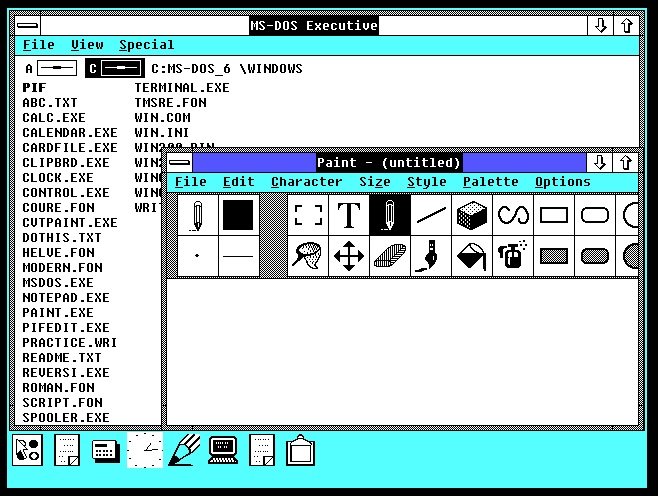
While it didn’t introduce radical design changes, it played a pivotal role in making Windows more practical for everyday use, representing a significant advancement over earlier versions of Windows 1.x. Furthermore, Windows 2.03 built upon the improvements introduced in Windows 2.0, such as nested windows and enhanced memory management.
These features made the system more efficient and user-friendly. As a result, users could work with multiple applications more comfortably, improving productivity and workflow. Consequently, this release increased Windows’ appeal to both home and business users.
Windows 2.03 also demonstrated Microsoft’s commitment to continuous improvement and innovation. Although early Windows systems were still limited compared to modern operating systems, each update contributed to building a more stable and robust platform. Therefore, Windows 2.03 played a crucial role in shaping the future development of Windows.
Key Features:
- Support for nested windows.
- Allows windows to nest instead of being arranged side-by-side.
- Improved multitasking and workspace organization.
- Improved memory management.
- Improved system memory usage.
- Smoother operation of many applications.
- Support for keyboard shortcuts.
- Enter keyboard commands for faster navigation.
- Improved accessibility for advanced users.
- Enhanced graphical interface.
- Improved icons and graphics.
- Better responsiveness of menus and windows.
- Better application compatibility.
- Support for more advanced applications.
- Provides a consistent platform for developers.
- Integration with MS-DOS.
- Continues to run on MS-DOS.
- Requires a DOS environment to run Windows.
What’s New / Latest Updates
Improved multitasking experience
Initially, Windows 2.03 improved multitasking by allowing windows to nest. This feature made it easier for users to switch between applications and manage their workspace. As a result, productivity improved significantly compared to previous versions.
Performance Improvements
In addition, the update introduced improvements to memory management, allowing applications to run more efficiently. As a result, users noticed a reduction in slowdowns and a significant improvement in system performance.
User Interface Improvements
Minor improvements were also made to the graphical user interface. While the overall design remained similar, navigation became smoother and more intuitive. Consequently, users found it easier to interact with the system.
Expanded Software Compatibility
Another important update was improved system compatibility with software applications. This encouraged developers to create more programs for Windows, thus expanding its ecosystem.
You may also Download:
System Requirements:
Minimum Requirements:
- Intel 8086 or compatible processor.
- At least 512 KB of RAM.
- MS-DOS 3.0 or later.
- Floppy disk drive or hard disk drive.
- Graphics card such as CGA, EGA, or VGA.
Additional Requirements:
- Keyboard required for data entry.
- Mouse recommended for better navigation.
Advantages and Disadvantages:
Advantages:
- Introduction of nested windows.
- Improved multitasking.
- Better memory management.
- Greater responsiveness of the user interface.
- Greater application compatibility.
Disadvantages:
- Still based on MS-DOS.
- Limited features compared to newer versions.
- Limited performance due to hardware limitations.
- Limited graphics capabilities.
- Initially not widely adopted.
Additional Requirements or Features:
Improvements in user experience:
Windows 2.03 offered a more flexible and efficient user experience. As a result, users were able to manage tasks more effectively and work more comfortably.
Opportunities for Developers:
The improved platform encouraged developers to create more sophisticated applications, which helped expand the range of Windows software.
System Limitations:
Despite the improvements, the system was still limited by hardware restrictions. However, it represented a clear advance over previous versions.
Historical Significance:
Windows 2.03 played a pivotal role in the transformation of Windows, moving from an experimental interface to a more practical operating environment. It paved the way for later versions such as Windows 3.0.
Frequently Asked Questions:
What is Windows 2.03?
Windows 2.03 was an update to the Windows 2.x series, which improved multitasking, performance, and ease of use.
What differentiated Windows 2.03 from Windows 1.x?
Windows 2.03 introduced nested windows and improved memory management, which significantly enhanced usability.
Did Windows 2.03 achieve widespread adoption?
It contributed to its wider adoption, although this occurred with later versions.
Did it replace MS-DOS?
No, it continued to run alongside MS-DOS.
What was its significance?
It introduced key features that shaped subsequent versions of Windows.
Conclusion:
Windows 2.03 marked a turning point in the evolution of Microsoft Windows. By introducing nested windows, improving memory management, and refining the user interface, it significantly enhanced the system’s usability. Consequently, it helped transform Windows into a more practical and efficient computing environment.
Homepage: windowstan.info
1 comment