
Windows 1.01 First Release Free Download
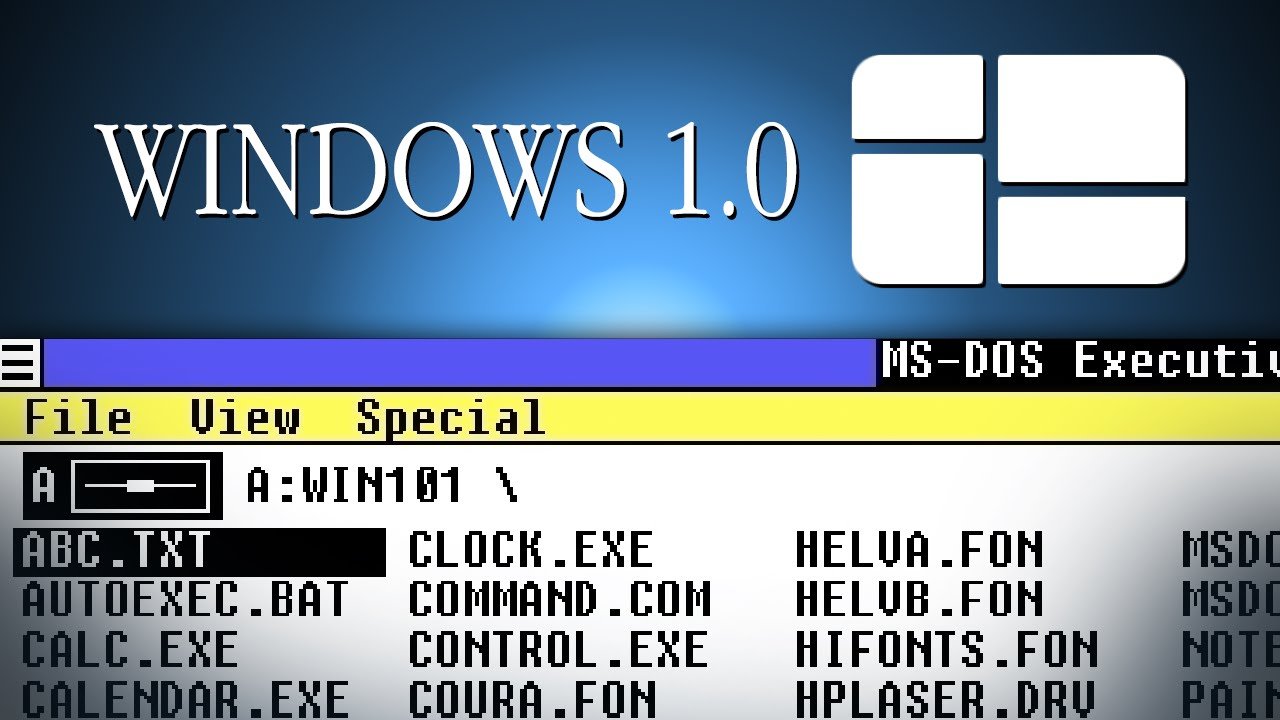
Windows 1.01, often considered the first official release of Microsoft Windows, marked a significant milestone in the history of personal computing. Released in November 1985, this early version introduced a graphical user interface (GUI) running on the MS-DOS operating system.
At the time, most computers relied on the command line, and Windows 1.01 provided a much more user-friendly way to interact with it, laying the foundation for the modern Windows operating systems we use today.
Furthermore, Windows 1.01 was designed to make computing more accessible to ordinary users. Instead of typing complex commands, users could navigate between windows, menus, and icons using a mouse. While its functionality was limited by today’s standards, it represented a significant leap forward in ease of use, bridging the gap between technical users and beginners.
Windows 1.01 also introduced a new form of multitasking, allowing users to run multiple applications simultaneously. Although these windows could not overlap, the ability to switch between tasks was a major innovation at the time. Thus, this release played a pivotal role in shaping the future of graphical operating systems and laid the foundation for later, more advanced versions of Windows.
Key Features
Windows 1.01 introduced several key features that characterized early graphical operating systems.
Graphical User Interface (GUI):
- A mouse-controlled interface.
- Allowing users to interact with menus, icons, and windows instead of typing commands.
Tilted Window Management:
- Support for opening multiple applications simultaneously.
- Tile-based window arrangement, preventing overlapping.
Basic Applications Included:
- Calculator.
- Calendar.
- Notepad.
- Paint.
- Clock.
- Reversey Game.
Mouse Support:
- Encouraging mouse use, which was not common at the time.
- Easier navigation compared to keyboard-only systems.
Integration with MS-DOS:
- Running on top of MS-DOS rather than replacing it.
- The need to run Windows using DOS commands.
What’s New / Latest Updates
Upon its release, Windows 1.01 introduced several groundbreaking innovations.
Introduction of the Graphical User Interface (GUI):
The most significant of these innovations was the graphical user interface. Instead of relying solely on text commands, users could now interact visually with the system. This made using a computer much easier and less complicated.
Multitasking:
Furthermore, Windows 1.01 enabled users to run multiple applications and switch between them easily. While this feature was limited compared to modern multitasking, it represented a significant leap forward.
Unified Application Environment:
The system also introduced a unified application environment. Developers could create programs that followed similar interface rules, improving usability.
Mouse Interaction:
Another major update was the integration of mouse support. This feature made navigation faster and more efficient, especially for beginners.
You may also Download:
System Requirements:
Since Windows 1.01 was designed for older PCs, its system requirements were quite basic by today’s standards.
Minimum Requirements:
- Processor: Intel 8086/8088 or equivalent.
- RAM: 256 KB minimum.
- Storage: Two floppy disk drives or one hard drive.
- Graphics Card: CGA, Hercules, or EGA graphics card.
- Operating System: MS-DOS 2.0 or later.
Additional Requirements:
- A mouse is recommended, but not required.
- A keyboard is required for entering commands.
- These requirements made Windows 1.01 accessible to many users of older PCs.
Advantages and Disadvantages:
Advantages:
- Introduced a graphical interface to PCs.
- Facilitated PC use.
- Basic multitasking support.
- Included useful built-in applications.
- Encouraged mouse use.
Disadvantages:
- Limited functionality.
- No overlapping windows.
- Slow performance on older computers.
- Dependence on MS-DOS.
- Limited software compatibility.
Additional Requirements or Features:
User Experience:
Despite its simplicity, the interface was designed to be easy to use. As a result, new users were able to learn quickly.
Opportunities for Developers:
Windows 1.01 opened new horizons for software developers. They could now create graphical applications instead of command-line programs.
Limited Market Adoption:
However, adoption was initially slow because many users were accustomed to DOS. Furthermore, hardware limitations restricted performance.
Historical Impact:
Despite its limitations, Windows 1.01 laid the groundwork for later versions like Windows 2.0 and Windows 3.x, which significantly improved its performance.
Frequently Asked Questions:
What is Windows 1.01?
Windows 1.01 was the first version of Microsoft Windows, released in 1985 with a graphical user interface.
Was Windows 1.01 a complete operating system?
No, it ran on top of and was based on MS-DOS.
Did Windows 1.01 support multitasking?
Yes, but only basic multitasking with adjacent windows.
What was its significance?
It introduced graphical computing to personal computers, making them much easier to use.
Can modern programs run on Windows 1.01?
No, it is not compatible with modern applications.
Conclusion:
Windows 1.01 was a pioneering version that introduced the concept of graphical computing to the world of personal computers. Despite its limited functionality, it laid the foundation for later operating systems that became more powerful and user-friendly. Therefore, it holds a prominent place in the history of technology.
Homepage: windowstan.info
Post Comment